

NEWNow you can take heed to Fox Information articles!
Archaeologists in North Carolina not too long ago found 4 18th-century shipwrecks – together with the doubtless stays of a detonated enemy vessel.
East Carolina College introduced the invention on July 24. The ships had been positioned this spring at Brunswick City/Fort Anderson, within the state’s Cape Worry area.
Jeremy Borrelli, a workers archaeologist for ECU’s maritime research program, instructed Fox Information Digital the staff recovered 63 wood shipwreck timbers – 47 of that are believed to be a part of La Fortuna, a Spanish privateer ship from Cuba.
DIVERS REVEAL IMAGES OF 321-YEAR-OLD SHIPWRECK IN REMARKABLE CONDITION OFF COAST
La Fortuna attacked the port throughout King George’s Warfare in 1748, one of many French and Indian conflicts in North America. It exploded close to the wharves at Brunswick City and has not been seen since.
Discovering the ship was pure luck, Borrelli stated, because the stays of the vessel broke away from the Cape Worry River mud inside two weeks of the beginning of the summer season discipline faculty.
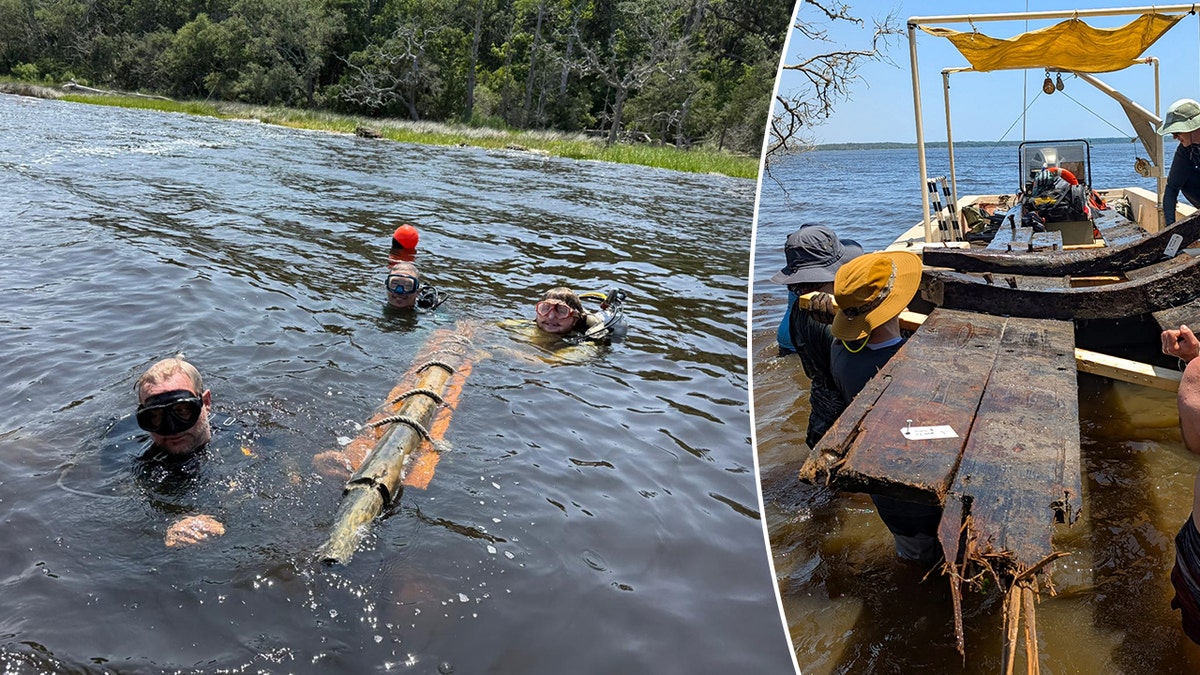
Archaeologists from East Carolina College not too long ago documented 4 18th-century shipwrecks alongside the Cape Worry River shoreline. (ECU Program in Maritime Research)
“If luck hadn’t been on our facet, the wreck could be misplaced eternally from the coastal erosion impacting the historic website’s shoreline,” the archaeologist stated.
Remarkably, the wood stays “appear to be they had been lower yesterday,” stated Borrelli.
DIVERS DISCOVER 2,000-YEAR-OLD SHIPWRECK LOADED WITH PRISTINE ANCIENT CERAMICS: ‘EXTREMELY VALUABLE’
“Every timber is remarkably preserved, and most nonetheless retain unique instrument marks from the shipwright to form the tree into frames or planking.”
Divers additionally uncovered the wreck of a flatboat, serving to to make clear on a regular basis commerce in the course of the 18th century.
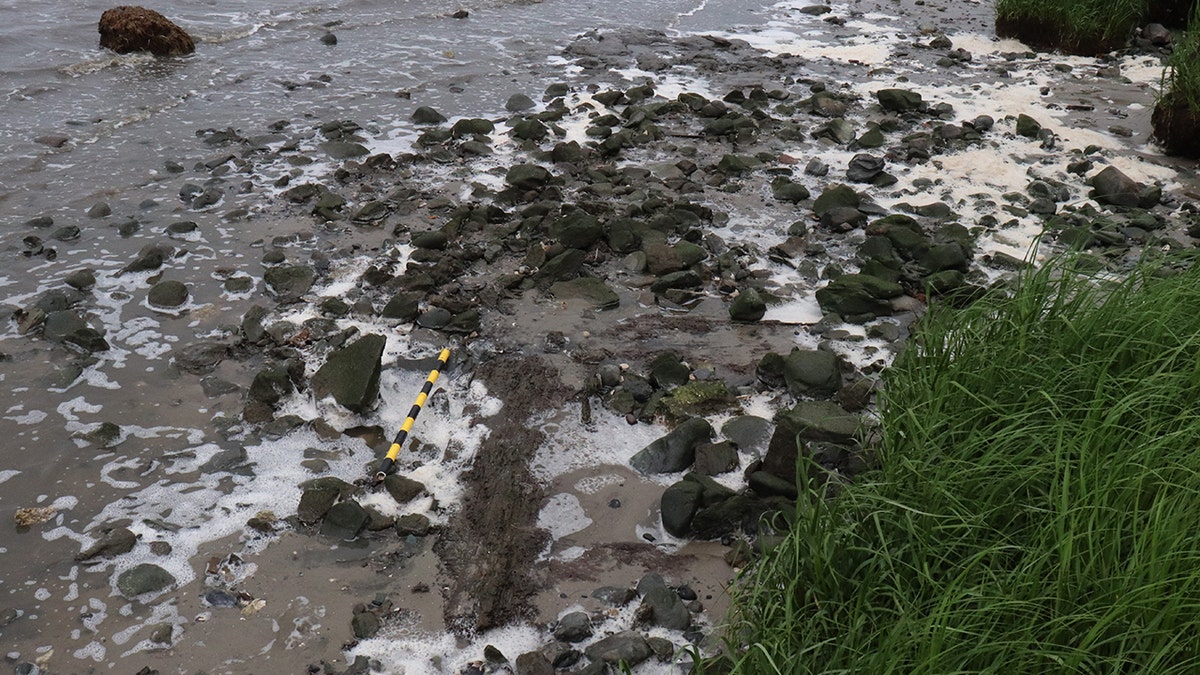
The discoveries had been made at Brunswick City/Fort Anderson, a historic port website in North Carolina. (ECU Program in Maritime Research)
Archaeologists additionally discovered a vessel doubtless used for landfill retention, plus one other one that is still unidentified.
“To search out this number of shipwrecks in shut proximity to different historic waterfront infrastructure is uncommon and extremely thrilling.”
Borrelli stated the staff additionally discovered a whole bunch of artifacts, although they solely collected the objects that can assist decide the age of the ships.
The finds included ceramic items, glass bottles and clay tobacco pipes, plus a cooper’s adze, barrel heads and staves.
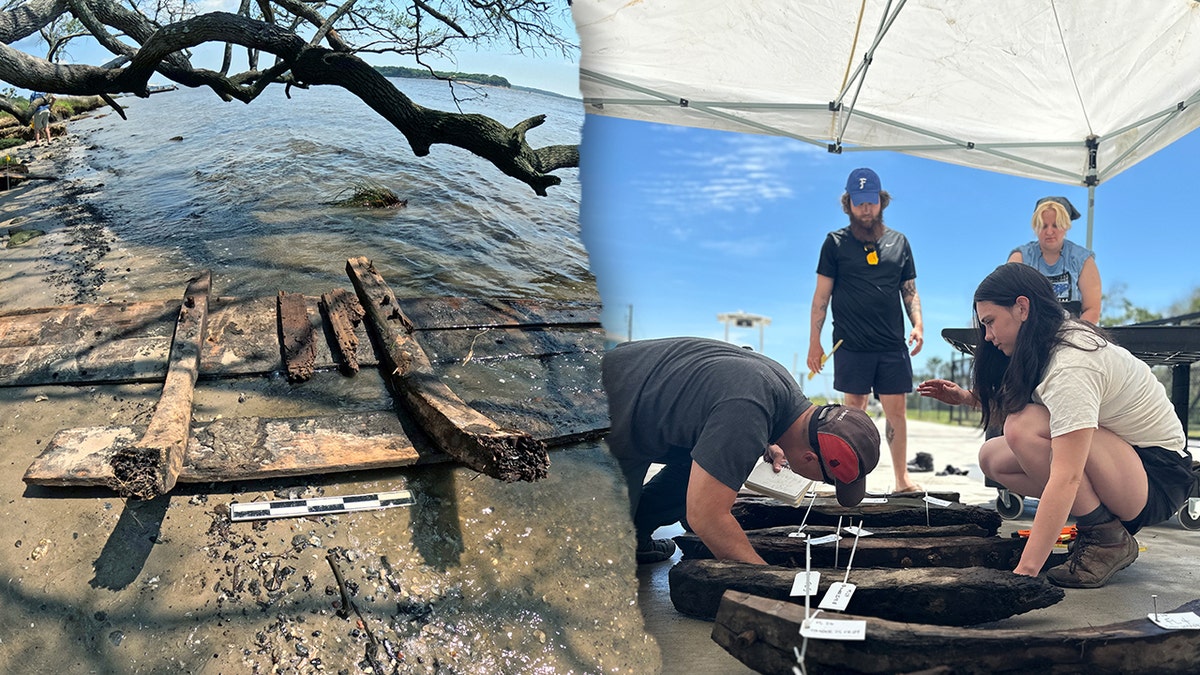
Greater than 60 preserved wood timbers had been recovered in the course of the discipline faculty this summer season. (ECU Program in Maritime Research)
Sailcloth, leather-based sneakers, doable clothes fragments and a butchered animal bone had been additionally recovered on the website.
CLICK HERE TO SIGN UP FOR OUR LIFESTYLE NEWSLETTER
“Two Spanish Puebla Blue-on-White majolica ceramic sherds had been discovered among the many recovered shipwreck timbers,” Borrelli added.
“This ceramic kind is instantly related to 18th-century Spanish-American archaeological websites, and is one other clue supporting the preliminary identification of La Fortuna.”
“Their discovery exhibits the significance of defending historic locations and the finite cultural assets inside them.”
He stated the invention supplies new perception into colonial North Carolina historical past, from the port city’s vulnerability to how wrecked ships had been used for land retention infrastructure.
For extra Life-style articles, go to foxnews.com/way of life
“To search out this number of shipwrecks in shut proximity to different historic waterfront infrastructure is uncommon and extremely thrilling,” Borrelli stated.
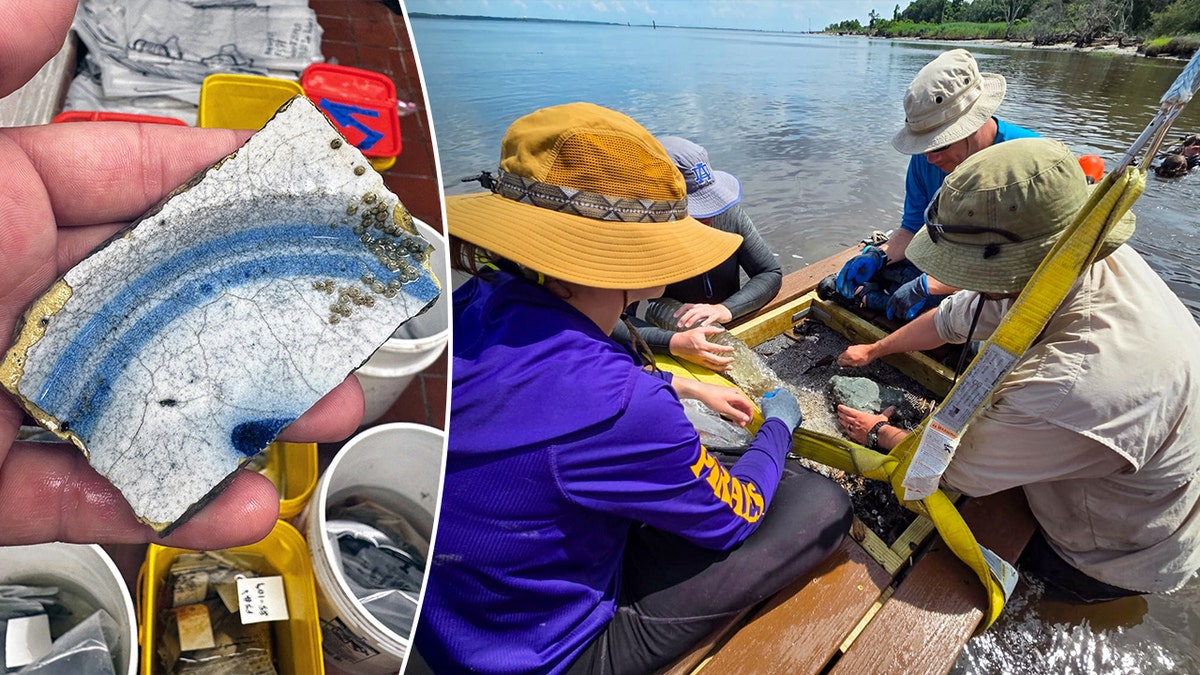
“Two Spanish Puebla Blue-on-White majolica ceramic shreds … are one other clue supporting the identification of La Fortuna.” (ECU Program in Maritime Research)
“These wrecks symbolize a variety of previous maritime actions that can assist us to grasp how ports like Brunswick City helped form the early growth of North Carolina,” he continued.
“Their discovery exhibits the significance of defending historic locations and the finite cultural assets inside them.”
CLICK HERE TO GET THE FOX NEWS APP
The shipwreck stays are being analyzed by ECU conservationists. The venture’s preliminary findings are encouraging, however there’s nonetheless “much more work to be achieved,” stated Borrelli.
“This may enable us to investigate the shipwreck because it was initially located on the riverbed in addition to examine the positioning to different 18th-century ships to find out what kind of watercraft it could be.”