

Archaeologists just lately unveiled a collection of unusual, centuries-old inscriptions within the room believed to be the location of the Final Supper – simply in time for Easter.
The Room of the Final Supper, often known as the Cenacle, is positioned on Mount Zion in Jerusalem. The corridor was constructed by the Crusaders within the twelfth century, although pilgrims have commemorated the location as early because the 4th century.
The current discovery was introduced by the Austrian Academy of Science (OeAW) on April 16, with the assistance of the Israel Antiquities Authority (IAA). Archaeologists recognized some 40 parts of graffiti, together with 5 coats of arms.
RARE 4,000-YEAR-OLD MUSICAL INSTRUMENT ‘BURIED IN THE GROUND’ PUZZLES ARCHAEOLOGISTS
Many of the inscriptions date again to the late Center Ages.
Researchers discovered that the location attracted quite a few worldwide vacationers – and a number of other pilgrims left messages of their native language.
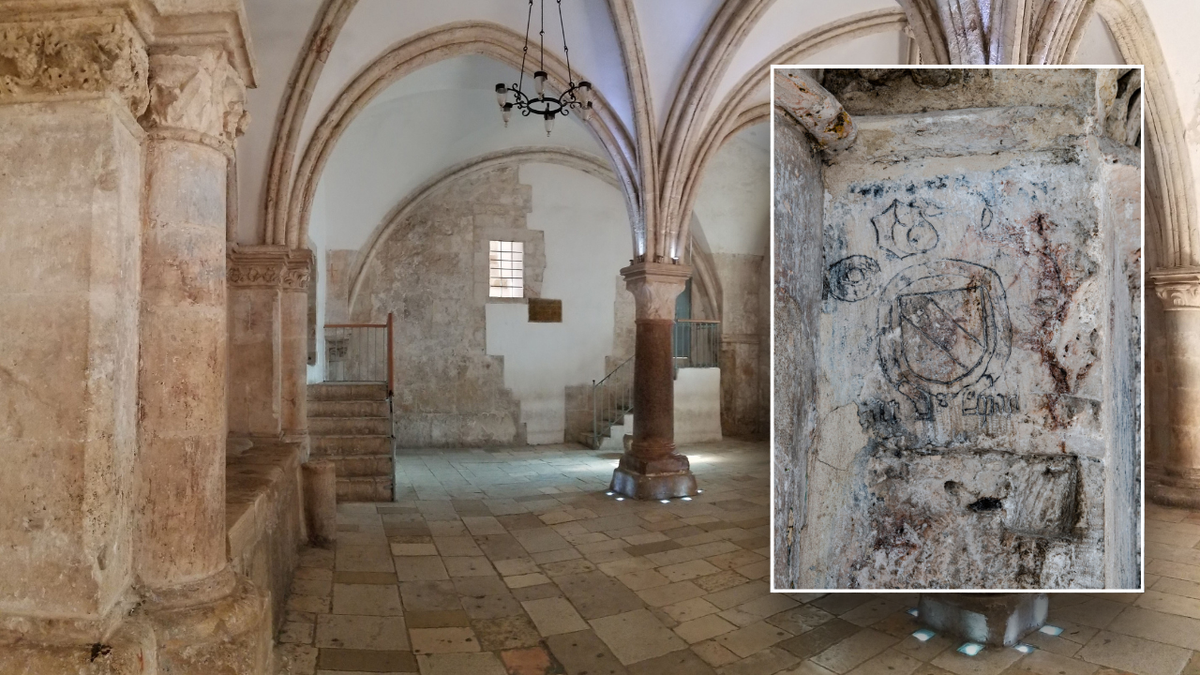
Researchers just lately unveiled never-before-seen graffiti discovered on the website of the Final Supper. (Heritage Conservation Jerusalem Pikiwiki Israel; Shai Halevi / © Israel Antiquities Authority)
Footage from the location present varied coats of arms and writings in historical languages.
A drawing of a scorpion was additionally discovered — presumably when Suleiman the Magnificent took over the Cenacle in 1523 and turned it right into a mosque.
One attention-grabbing depiction of the Final Supper was discovered above a German coat of arms.
The inscriptions have been written by pilgrims from Serbia, the modern-day Czech Republic and Germany, in addition to Armenia and Syria.
ANCIENT TREASURE FOUND BY METAL DETECTORISTS IN ‘IMPORTANT’ AND LEGENDARY REGION
Many of the graffiti, although, was left by Arabic-speaking Christians.
One attention-grabbing depiction of the Final Supper was discovered above a German coat of arms, which depicted a goblet, a platter, and a spherical piece of bread with a gap in it, just like a Jerusalem bagel.
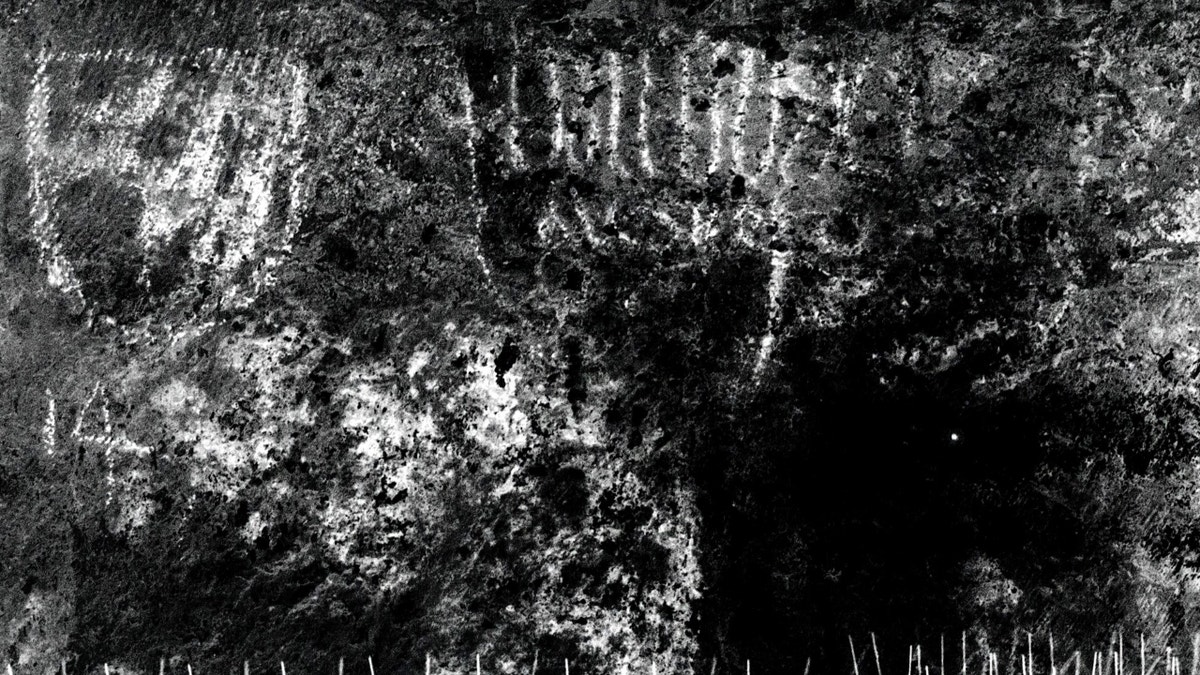
This picture reveals a Styrian coat of arms, in addition to an Armenian “Christmas 1300” inscription and a Serbian inscription studying “Akakius.” (Shai Halevi / © Israel Antiquities Authority)
Researchers additionally discovered an Armenian inscription studying “Christmas 1300,” in addition to an Arabic inscription studying “ya al-Ḥalabīya.”
For extra Life-style articles, go to foxnews.com/way of life
“Based mostly on the double use of the female suffix ‘ya’, the researchers concluded that it is a graffito of a feminine Christian pilgrim from the Syrian metropolis of Aleppo, making it a uncommon materials hint of pre-modern feminine pilgrimage,” the assertion famous.
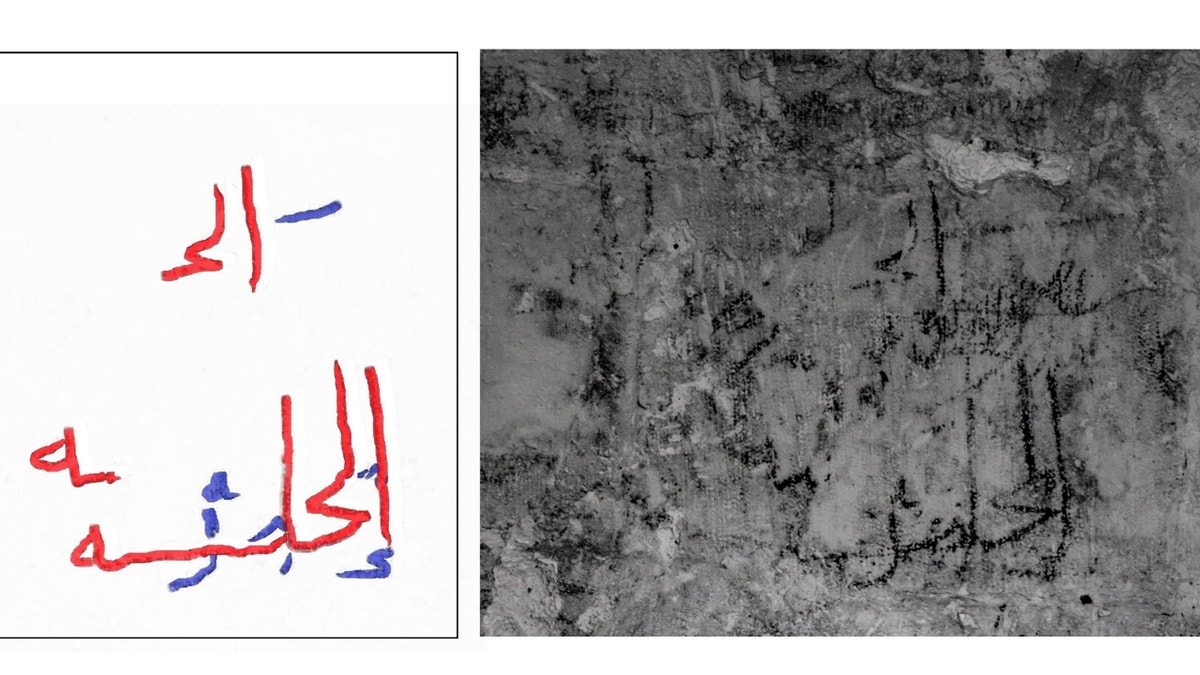
Researchers discovered the inscription of a Syrian lady from Aleppo, seen right here. (Shai Halevi / © Israel Antiquities Authority)
Researchers first documented the inscriptions utilizing multispectral pictures and Reflectance Transformation Imaging (RTI), earlier than analyzing the pictures in a lab.
Analysts then “digitally merged” the 2 photographic strategies to make the inscriptions readable.
Within the press launch, historian Ilya Berkovich stated the graffiti was surprisingly various, with a number of nations being represented on the partitions of the corridor.
CLICK HERE TO SIGN UP FOR OUR LIFESTYLE NEWSLETTER
“When put collectively, the inscriptions present a novel perception into the geographical origins of the pilgrims,” Berkovich stated within the launch. “This was way more various than present Western-dominated analysis perspective led us to imagine.”
Christianity-related finds
The most recent discovery is certainly one of many Christianity-related finds in current months.
Earlier in April, an archaeologist excavating the Church of the Holy Sepulchre discovered proof of an historical backyard on the website, in step with biblical scripture.
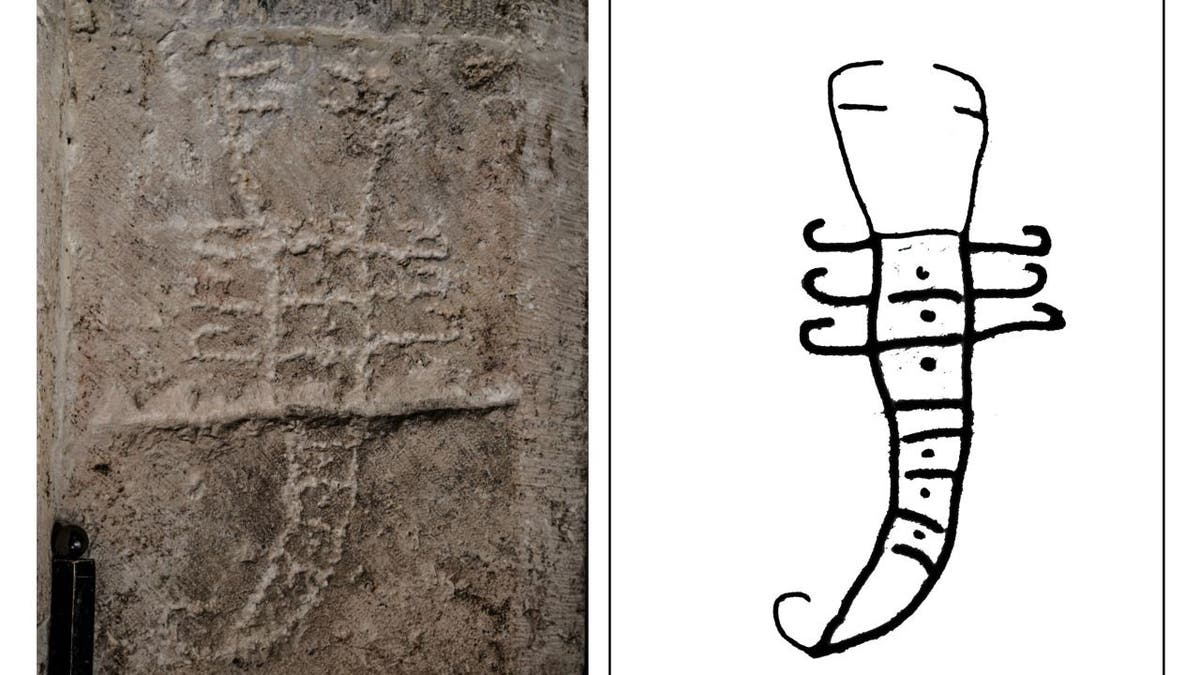
A scorpion was carved into the wall of the corridor, presumably across the time Suleiman the Magnificent took the location over. (Shai Halevi / © Israel Antiquities Authority)
In December, archaeologists unveiled the identified proof of Christianity north of Italy.
CLICK HERE TO GET THE FOX NEWS APP
It consisted of a silver inscription courting again to between 230 and 260 A.D.