

NEWNow you can hearken to Fox Information articles!
Archaeologists lately discovered an enormous stone basin in Italy relationship again greater than 2,000 years — remnants of a once-powerful rival of Rome.
The invention was discovered within the historic ruins of Gabii, about 11 miles east of Rome. College of Missouri archaeologists uncovered the stays, in keeping with an Oct. 16 college press launch.
Marcello Mogetta, chair of the Division of Classics, Archaeology and Faith, estimated the basin was constructed round 250 B.C.
ARCHAEOLOGISTS FIND 1,600-YEAR-OLD CHURCHES AND MURAL OF JESUS IN EGYPTIAN DESERT SETTLEMENT
The construction could also be one of many earliest examples of large-scale Roman public structure outdoors of temples and metropolis partitions. It could additionally exhibit how Roman architects have been influenced by Greeks.
Mogetta advised Fox Information Digital that Gabii and Rome each “traced their descent from widespread ancestors.”
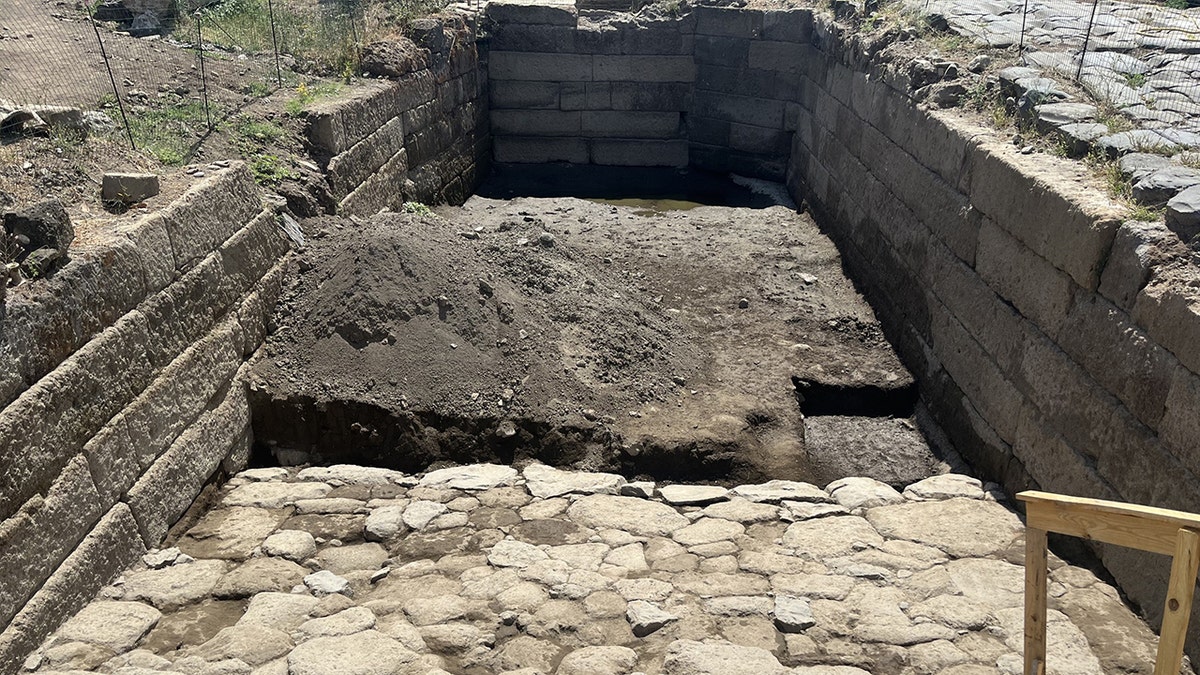
Archaeologists in Gabii, Italy, uncovered an enormous stone basin relationship again greater than 2,000 years. (Marcello Mogetta)
“In keeping with a number of the tales that circulated in Roman instances, Gabii was the place the place Romulus and Remus went to study the liberal arts,” mentioned Mogetta.
“This underscores the shut cultural ties, however the precise relationship was extra difficult than this.”
“In the long run … the expansion of Rome as a metropolis and superpower on the worldwide stage labored in opposition to Gabii.”
The 2 cities had a longstanding rivalry, pushed by aristocratic clans and warlords. Mogetta mentioned this seemingly performed out within the type of small-scale raiding events.
“The final recorded battle between Rome and Gabii dates to the start of the fifth century B.C., in the course of the Latin Warfare, during which the Gabines sided with the Latin states that reorganized their alliances in opposition to Roman hegemony,” he mentioned.
CLICK HERE TO SIGN UP FOR OUR LIFESTYLE NEWSLETTER
“The decisive victory of the Romans occurred on the battle of Lake Regillus, situated on the border of the territory of Gabii.”
Town of Gabii as soon as featured aristocratic residences, metropolis partitions, huts, homes, agricultural land and pastures and one temple referred to as the Santuario Orientale.
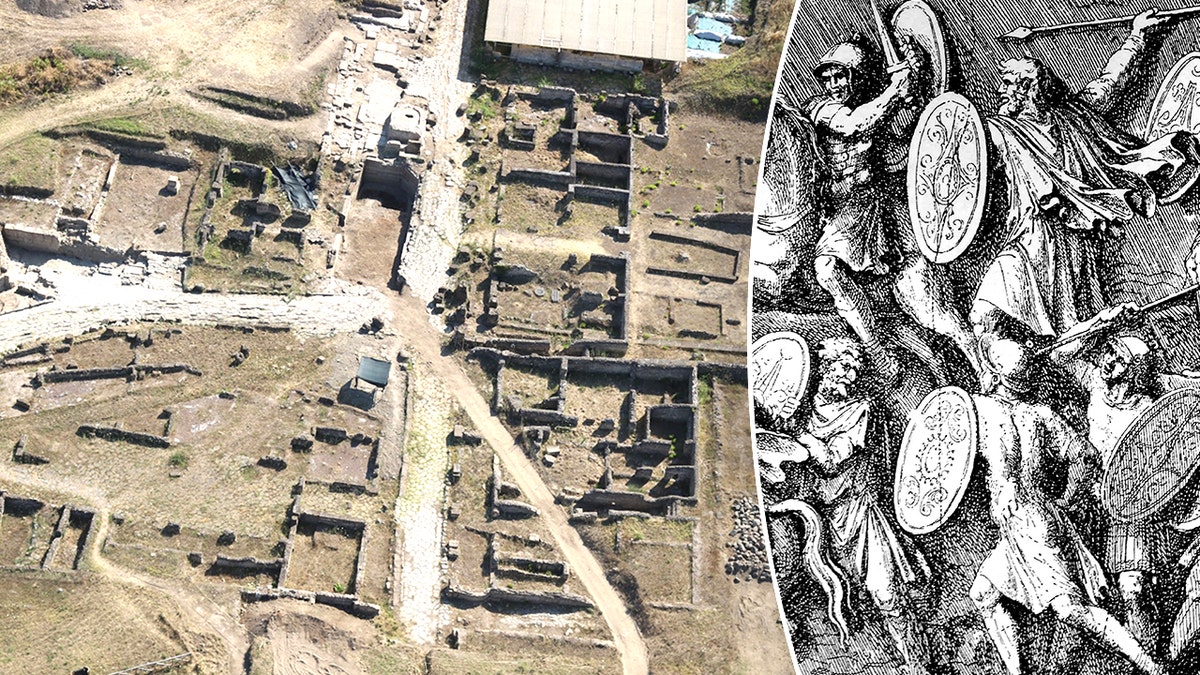
The invention has revealed structure from Gabii, a metropolis that clashed with Rome within the Latin Warfare. A generic Roman battle scene is seen above proper. (Marcello Mogetta; Photograph 12/Common Photographs Group through Getty Photographs)
The realm was occupied for two,000 years earlier than declining within the first century B.C. Former homes have been demolished and repurposed into quarries, graveyards and workshops.
“The dearth of a robust municipal elite meant that Gabii relied totally on investments from the emperors, which pale over time,” mentioned Mogetta. “Initially, the geographical proximity to Rome might have been a bonus, making Gabii uniquely related on the map of central Italian metropolis states.”
CLICK HERE FOR MORE LIFESTYLE STORIES
He added, “In the long run, nonetheless, the expansion of Rome as a metropolis and superpower on the worldwide stage labored in opposition to Gabii.”
The territory outdoors Gabii become marshland ultimately, Mogetta mentioned, which made it uninhabitable.
“There’s proof that Gabine elite households moved to Rome early on. … It made extra sense for different middle-class Gabine inhabitants that didn’t have ancestral ties to Gabii to go away for higher alternatives within the burgeoning imperial capital,” he mentioned.
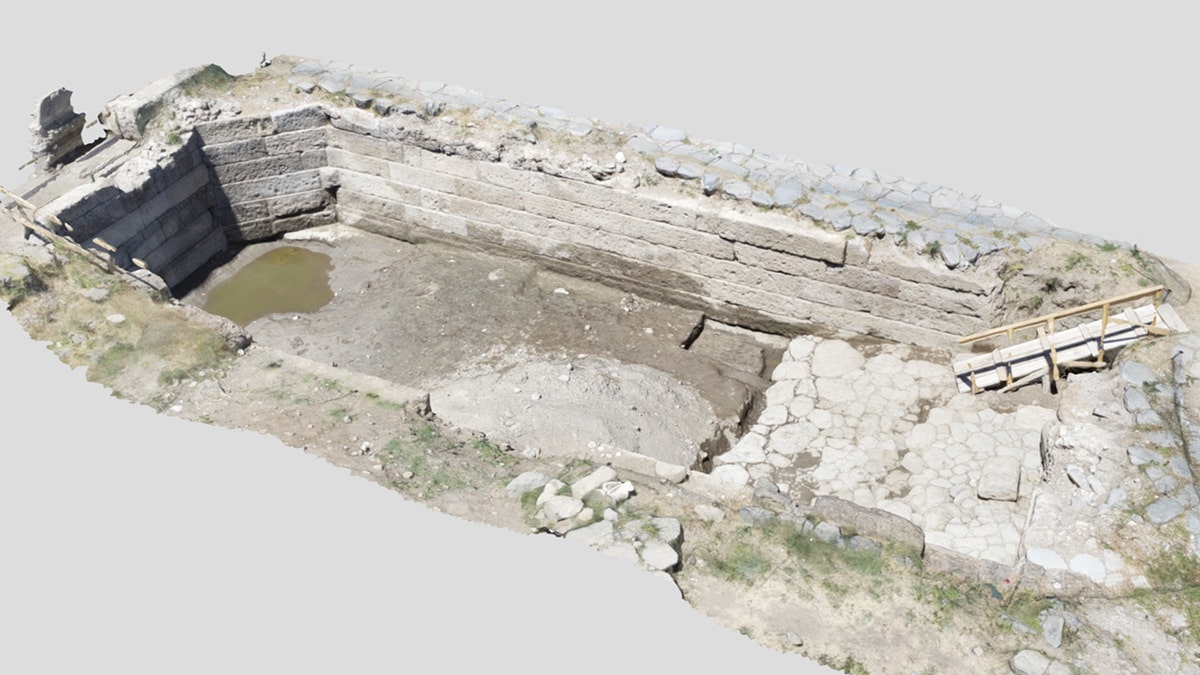
Archaeologists detected a further “anomaly” close to the basin, presumably overlaying one other man-made construction. (Marcello Mogetta; Photograph 12/Common Photographs Group through Getty Photographs)
On the website, the excavation crew additionally detected an “anomaly” — presumably a synthetic mound — simply behind the basin, which can be overlaying a man-made construction.
TEST YOURSELF WITH OUR LATEST LIFESTYLE QUIZ
Mogetta mentioned that subject work in 2026 and 2027 will reveal extra of the ruins. The knowledgeable advised Fox Information Digital that the basin was constructed at a “important second” within the third century B.C., when Gabii’s residents and planners had the means and motivations to create an city middle.
On the time, Rome had develop into extra profitable in its conquests and was producing new wealth and concepts that unfold to close by communities like Gabii.
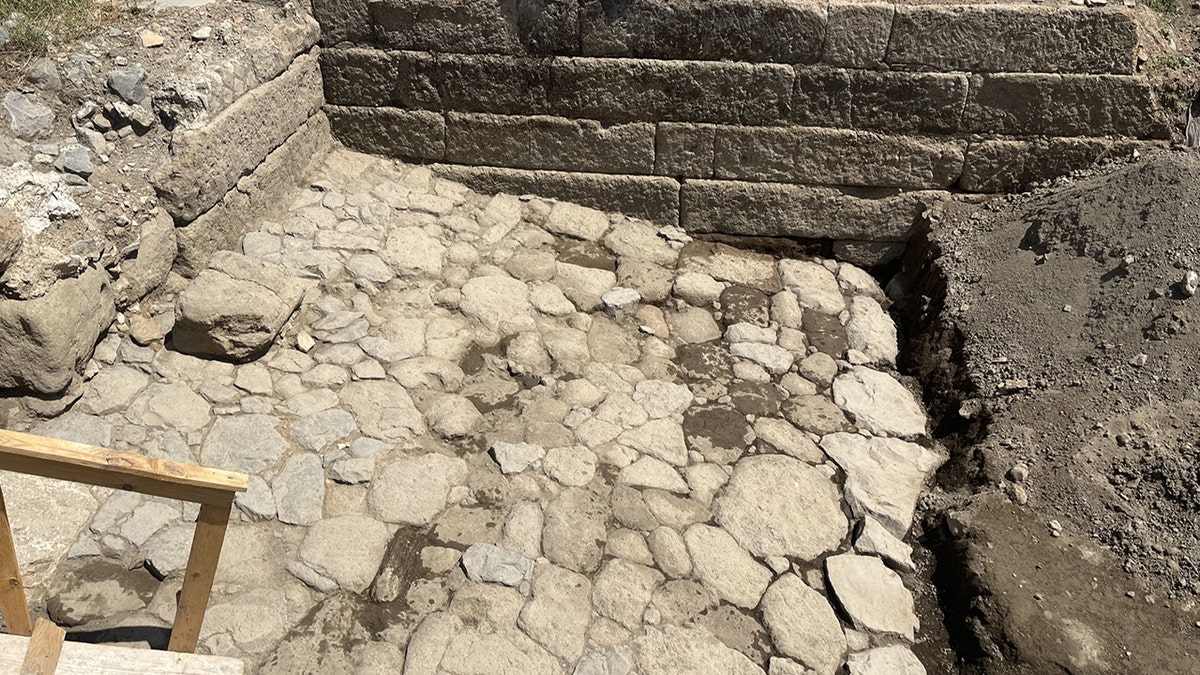
Gabii, as soon as a thriving city-state 11 miles from Rome, was an early rival to the capital. (Marcello Mogetta)
The end result was a “complete public constructing challenge that reworked the pure geomorphology of the panorama with a mix of native traditions and experimentation with Hellenistic tradition,” he mentioned.
CLICK HERE TO GET THE FOX NEWS APP
“The monumental pool we simply found appears to have decided the spatial and monumental focus of a a lot bigger ensemble that we don’t but see in its entirety,” Mogetta mentioned.