

NEWNow you can take heed to Fox Information articles!
Turkish officers not too long ago unveiled a gleaming gold brooch and a uncommon jade stone in Troy – a exceptional breakthrough that sheds mild on town’s pre-Greek previous.
The artifacts have been discovered by archaeologists excavating the Troy archaeological website, positioned in northwestern Turkey.
Troy was as soon as thought of a legendary metropolis, and its stays have been first unearthed by Heinrich Schliemann in 1870. The settlement is most well-known for being depicted in Homer’s epic poems “The Iliad” and “The Odyssey.”
ANCIENT CIVILIZATION’S GOLD COINS, LUXURY ARTIFACTS UNEARTHED DURING ‘UNPRECEDENTED’ DIG
The Turkish Directorate of Communications introduced the brand new finds in a Sept. 30 launch, citing Anadolu Company.
The artifacts have been discovered within the Troy II settlement layer, which dates again to 2,500 B.C. — some 4,500 years in the past.
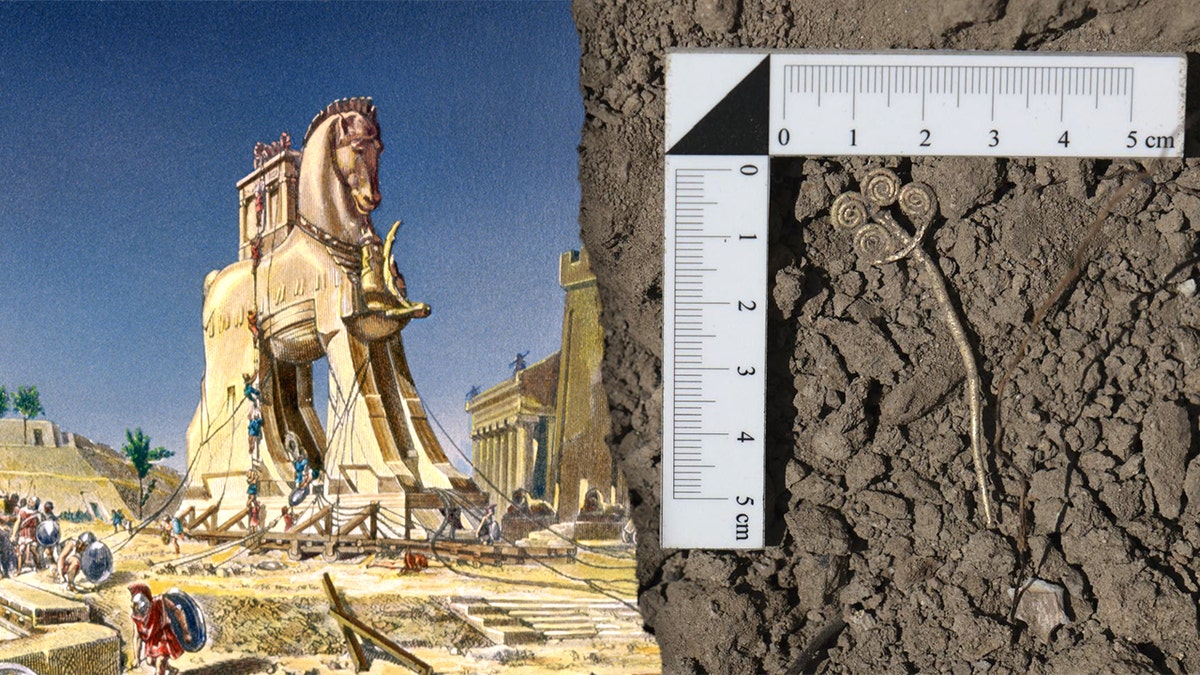
Archaeologists in northwestern Turkey uncovered a golden brooch and uncommon jade stone within the stays of the traditional metropolis of Troy. (Bettman through Getty Pictures; @MehmetNuriErsoy through X)
Turkish officers say the invention additionally sheds mild on “the long-standing debate concerning the start of the Troy II interval,” which is often cited as being between 2550 and 2500 B.C.
RARE ANCIENT GOLD DISCOVERY MADE BY FLORIDA STUDENT AT ARCHAEOLOGICAL SITE
In an X publish, Mehmet Nuri Ersoy, the Turkish minister of tradition and tourism, lauded the invention of the brooch.
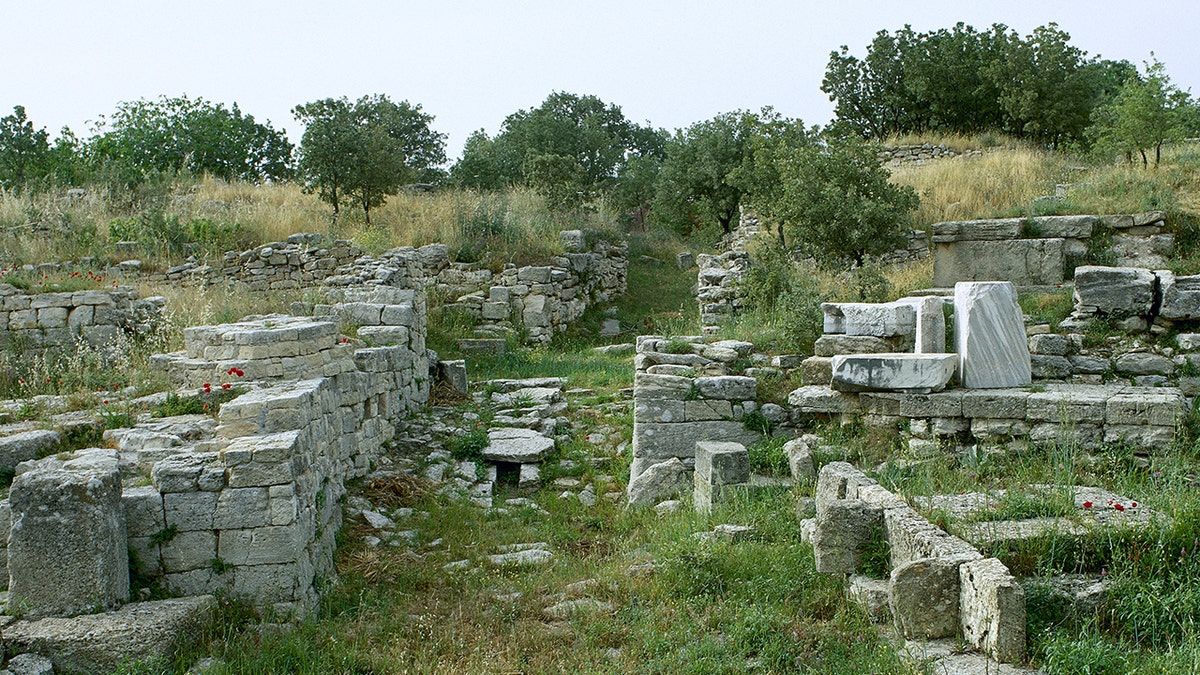
Excavations at Troy proceed to disclose extraordinary finds linking Anatolia with the early Mediterranean world. (LTL/Heritage Pictures through Getty Pictures)
“This brooch, the best-preserved of solely three recognized examples on the earth, is amongst probably the most vital finds of the final 100 years,” wrote Ersoy.
CLICK HERE TO SIGN UP FOR OUR LIFESTYLE NEWSLETTER
He stated that jade stones, just like the one not too long ago discovered, have been seen as luxurious gadgets in antiquity.
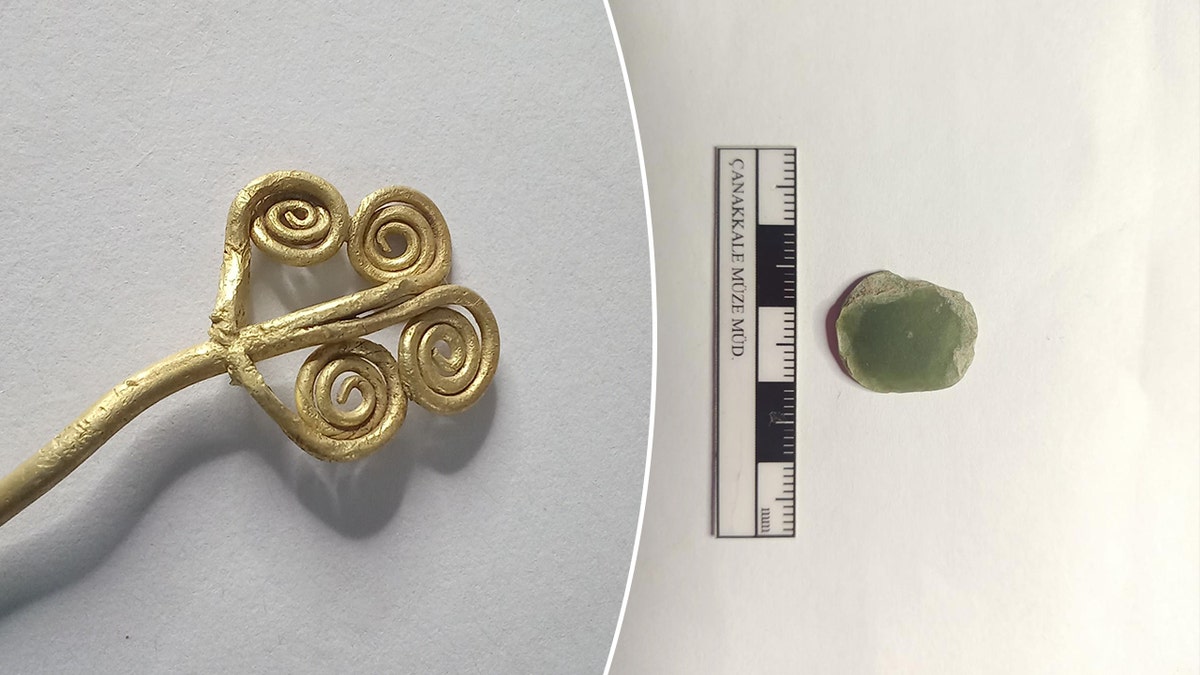
The golden brooch and jade stone, discovered within the Troy II layer, date again roughly 4,500 years. (@MehmetNuriErsoy through X)
The gem was not native to Anatolia, suggesting it arrived by means of long-distance commerce.
All artifacts are deliberate to be proven on the Troy Museum in Çanakkale, Turkey.
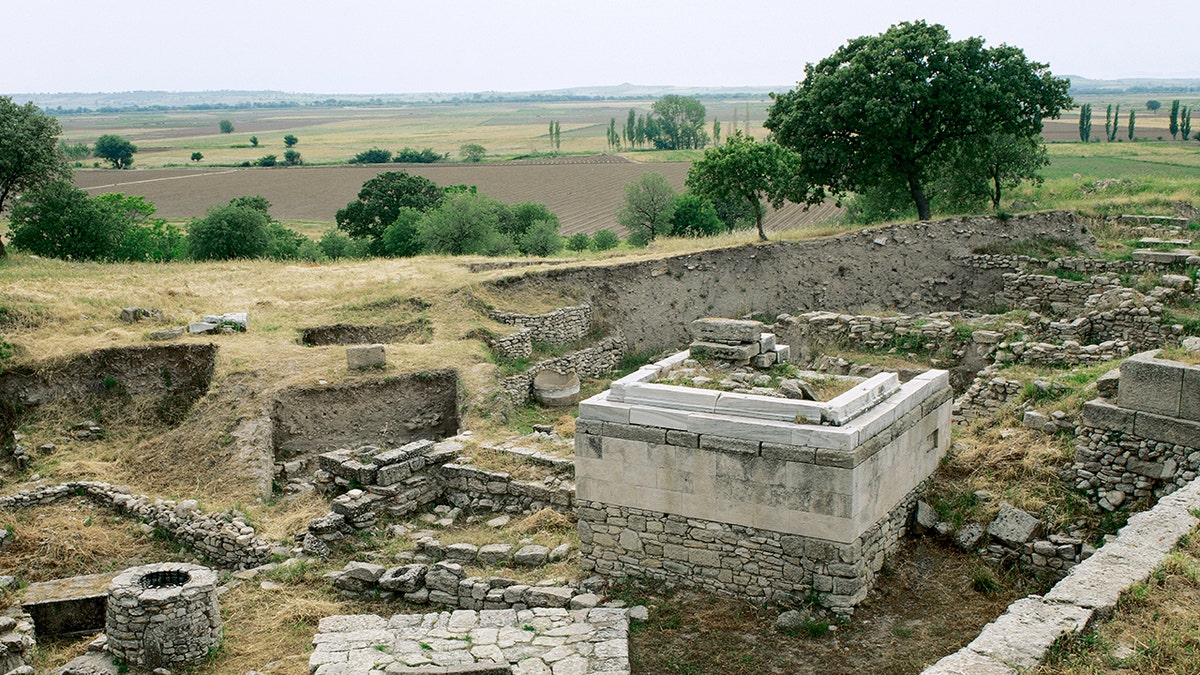
UNESCO calls Troy some of the well-known archaeological websites on the earth, wealthy in cultural heritage and delusion. (LTL/Heritage Pictures through Getty Pictures)
Troy was added to the UNESCO World Heritage Listing in 1998.
UNESCO’s web site says Troy is taken into account some of the well-known archaeological websites on the earth.
CLICK HERE TO GET THE FOX NEWS APP
“Its in depth stays are probably the most vital and substantial proof of the primary contact between the civilizations of Anatolia and the burgeoning Mediterranean world,” UNESCO says.