

NEWNow you can take heed to Fox Information articles!
Archaeologists have unearthed an “exceptionally well-preserved” canine skeleton from the Stone Age — laid to relaxation alongside a 5,000-year-old dagger.
The invention, introduced by Arkeologerna, a Swedish archaeological consultancy, occurred round a web site close to Järna, southwest of Stockholm.
Arkeologerna labored with its mother or father group, Sweden’s Nationwide Historic Museums (SHM), in the course of the excavation, which came about forward of railway development final fall.
SCIENTISTS SHATTER TIMELINE OF HUMAN FIRE-MAKING WITH 400,000-YEAR-OLD DISCOVERY IN ENGLAND
“A number of thousand years in the past, the three,500-square-meter [37,700-square-feet] space seemed very completely different,” the discharge stated.
“At the moment, the lavatory was a shimmering lake used for fishing.”
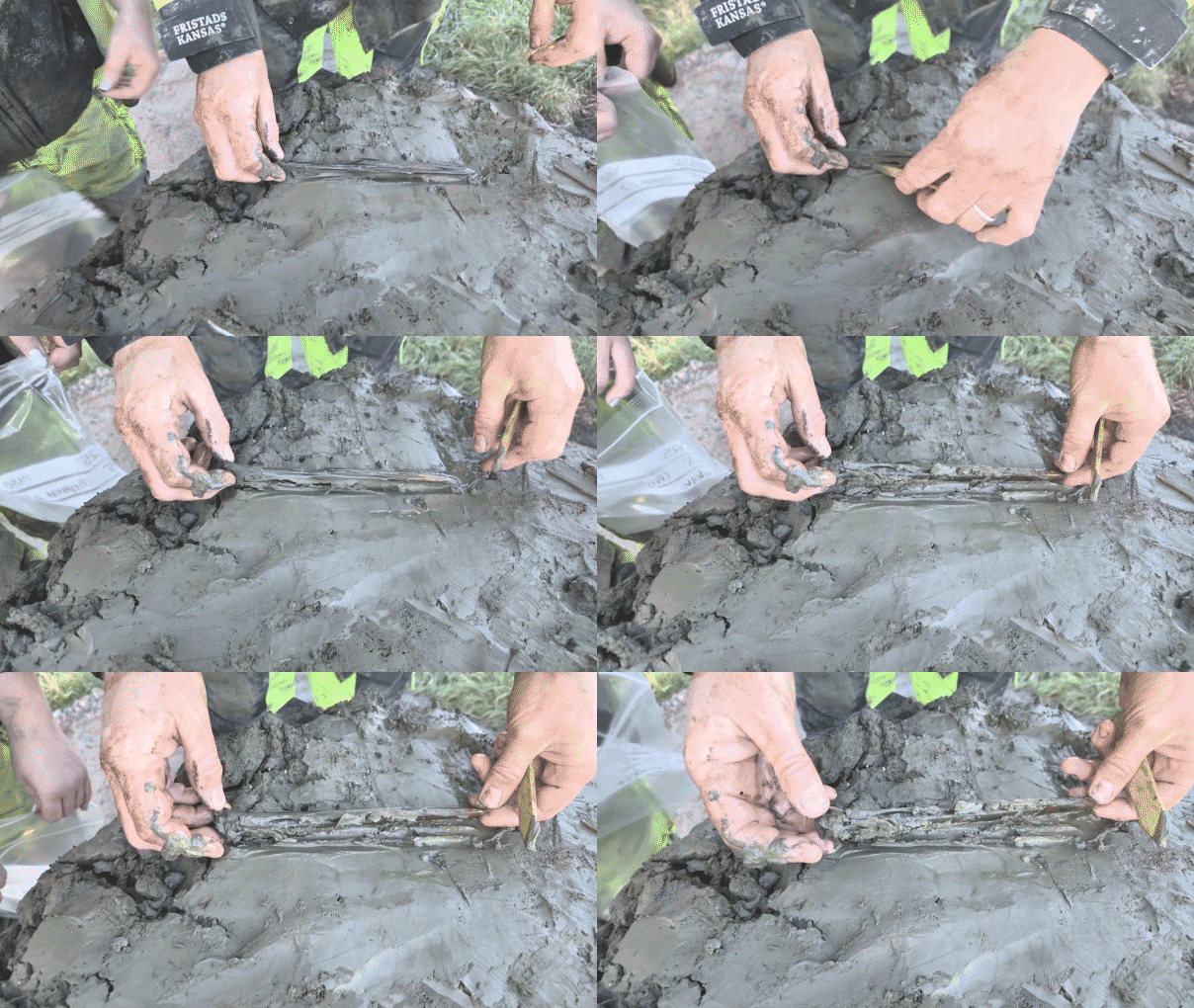
Archaeologists in Sweden uncovered an exceptionally well-preserved Stone Age canine burial web site — containing a finely polished bone dagger relationship again roughly 5,000 years. (Arkeologerna, SHM)
The canine was “intentionally” deposited with the bone dagger, which officers stated was slightly below 10 inches lengthy and was finely polished.
It was seemingly constructed from elk or crimson deer bone.
Officers described the canine as a “massive and highly effective male.” He was between three and 6 years outdated when he died.
CLICK HERE TO SIGN UP FOR OUR LIFESTYLE NEWSLETTER
Archaeologists consider the canine was positioned in a bag or container with stones and deposited about 100 to 130 toes out into the lake.
Linus Hagberg, venture supervisor of the excavation, instructed Fox Information Digital his workforce continues to be within the strategy of analyzing the stays, which they hoped would make clear when the canine lived and what he ate.

Officers say the canine was intentionally deposited in a lake close to present-day Jarna, southwest of Stockholm, in the course of the early Neolithic interval. (Arkeologerna, SHM)
“Canine burials from early Neolithic instances are very uncommon,” stated Hagberg.
“A few thousand years earlier, in the course of the Mesolithic, canine burials seem on burial grounds and on settlements, however they weren’t frequent in these days both.”
CLICK HERE FOR MORE LIFESTYLE STORIES
Researchers consider that the canine’s cranium was crushed when it died, versus being crushed in the course of the burial.
The bones survived the millennia as a result of they have been deposited in water — and Hagberg described their good situation as “uncommon as nicely.”

Officers stated the waterlogged circumstances helped protect the canine’s bones for hundreds of years. (Arkeologerna, SHM)
“Essentially the most stunning and surprising occasion [of the excavation] was the discovering of the deposited canine stays,” he stated. “Surely.”
TEST YOURSELF WITH OUR LATEST LIFESTYLE QUIZ
He additionally stated that, whereas it is not possible to explain the canine when it comes to trendy breeds, the canine was “comparatively massive, with broad jaws and large enamel.”

An excavation picture exhibits the Swedish wetland the place a 5,000-year-old canine burial was found, alongside the Fossum rock carvings in Sweden depicting prehistoric people and animals. (Arkeologerna, SHM; iStock)
The invention comes lower than a 12 months after archaeologists discovered one other well-preserved canine burial from historical Rome.
CLICK HERE TO GET THE FOX NEWS APP
Archaeologist Arne Verbrugge instructed Fox Information Digital that the burial, which was present in Belgium, was preserved “fairly nicely,” due to the calcareous sandstone below which it was buried.