

NEWNow you can hearken to Fox Information articles!
Archaeologists lately introduced the invention of a grand citadel affiliated with a long-forgotten medieval kingdom and nestled on an island in Scotland.
The Society of Antiquaries of Scotland introduced the invention, practically 30 years within the making, on Sept. 17.
The invention was made on the Finlaggan archaeological website on Islay, in response to the BBC. Islay, a distant island off Scotland’s western coast, is roughly 70 miles west of Glasgow.
SCHOOLBOY SPOTS AMERICAN REVOLUTION WARSHIP ON BEACH AFTER STORM UNCOVERS 230-YEAR-OLD WRECK
Archaeologist David Caldwell directed excavations of the positioning between 1989 and 1998. In his lately revealed findings, he argued that Finlaggan was an influence seat for the Lordship of the Isles, a semi-independent Gaelic kingdom through the late Center Ages.
The gem of the mission? A beforehand unknown and unnamed citadel at Finlaggan that dates to the twelfth and thirteenth centuries.
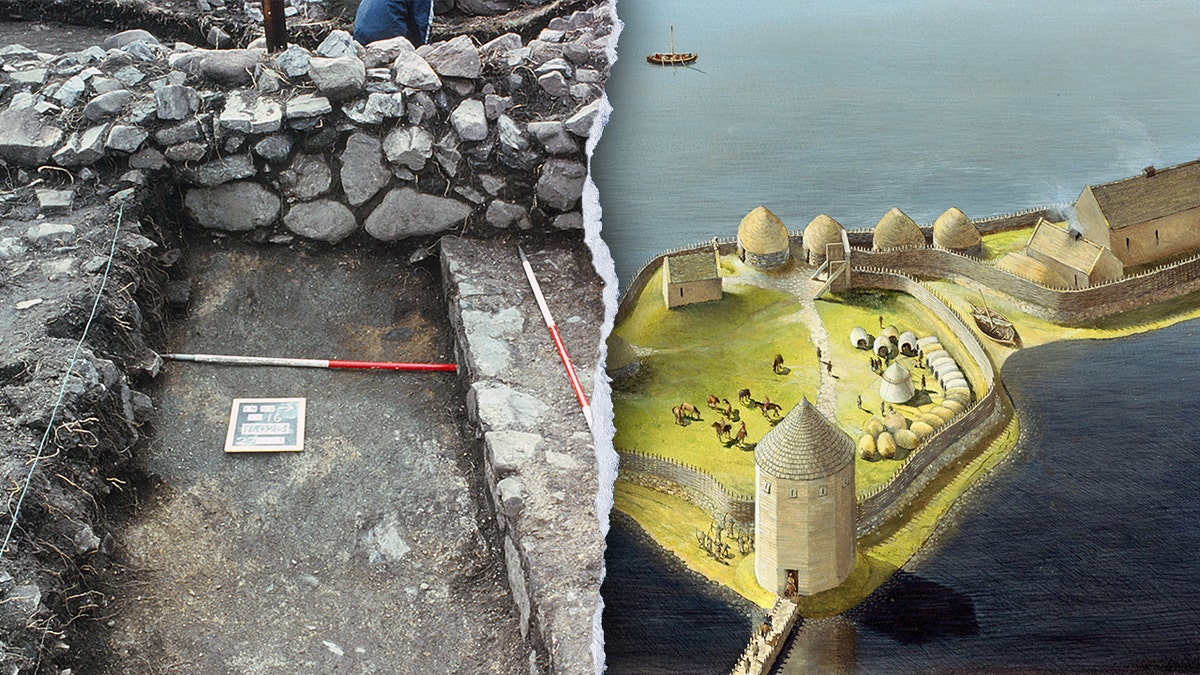
Archaeologists uncovered the stone foundations of a long-lost medieval citadel at Finlaggan on Scotland’s Islay island. (SWNS; David Simon)
Lately launched photographs present the stone foundations and cobbled surfaces of the traditional citadel, preserved beneath soil for a number of hundred years.
Officers additionally launched an artist’s reconstruction of the citadel, that includes a stone tower and a causeway, or bridge, connecting two small islands.
Caldwell’s findings recommend that the Lords of the Isles have been a robust dynasty, ruling from Finlaggan between 1300 and 1500 A.D.
“Proof contains a number of mounts and keys that belonged to caskets that are thought to have protected paperwork and different valuables, and the stays of the council home, talked about in a 1549 account, the place conferences of the Council of the Isles came about,” the Society of Antiquaries of Scotland mentioned in a press release.
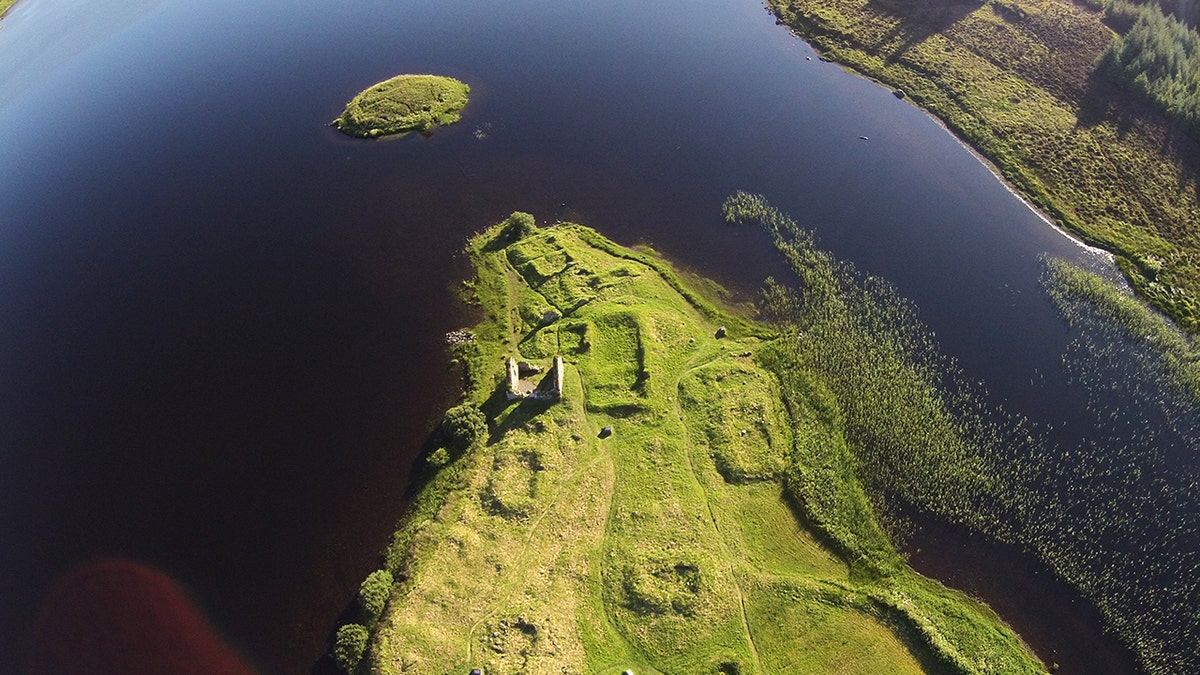
Researchers say the citadel as soon as housed an incredible corridor, chapel, courtyards, kitchens and personal quarters. (SWNS)
“As well as, the e-book reveals that the principle island was accessed by boat to a jetty from which cobbled paths result in the principle buildings, together with a feasting corridor, chapel and personal lodging, and to a causeway resulting in the council chamber on the smaller island,” the group added.
“This may have been a really perfect structure for ceremonial occasions.”
CLICK HERE TO SIGN UP FOR OUR LIFESTYLE NEWSLETTER
Archaeologists additionally discovered proof of a chapel and a “giant and imposing nice corridor,” shedding mild on the dimensions of the complicated. Historians imagine the citadel featured residing quarters and fortifications, plus courtyards, kitchens, homes and workshops.
“The tower is estimated to have been roughly 19 by 19m general (21m sq. together with a plinth), making it comparable in dimension to stone retains in England like these within the castles of Carlisle, Bamburgh and Lancaster,” the Society of Antiquaries of Scotland mentioned.
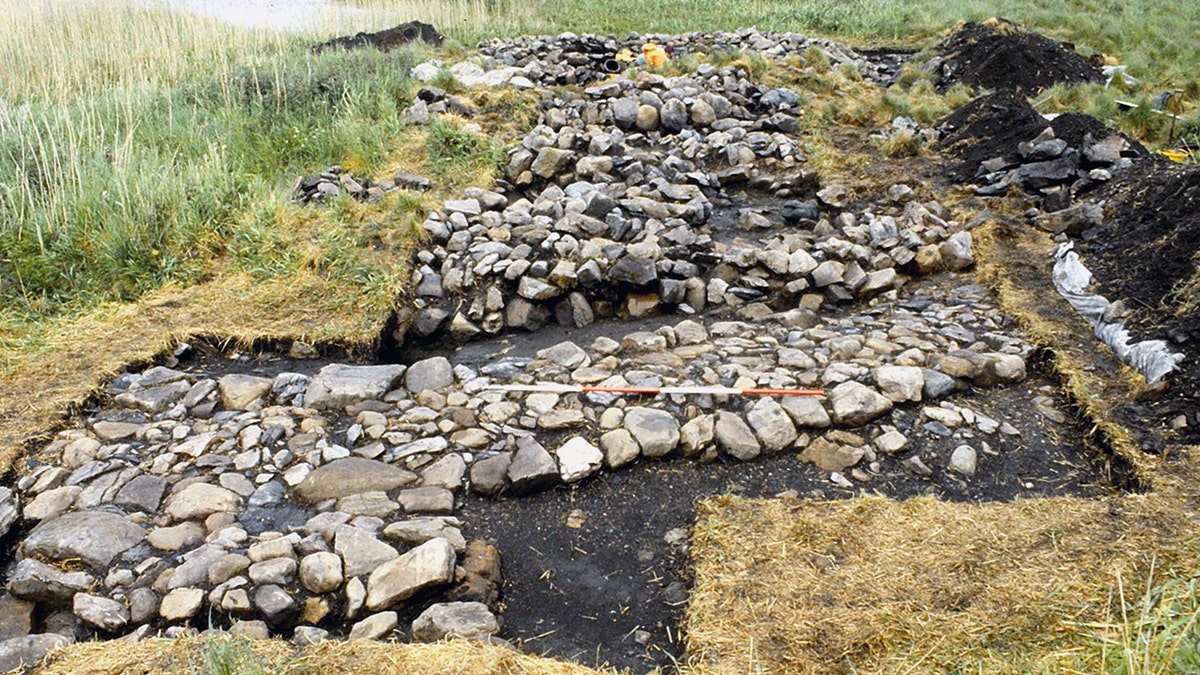
The Society of Antiquaries of Scotland introduced the invention following many years of analysis and excavation. (SWNS)
Archaeologists imagine the citadel was both dismantled as a result of structural points or destroyed by enemies. Regardless, its existence was a political assertion and an indication of wealth, as giant rectangular stone towers have been usually restricted to rival Anglo-Norman lords and rulers.
In a press release, Caldwell mentioned he was “privileged to have led a talented and devoted crew of specialists and volunteers on such an necessary mission on a key place of nationwide significance.“
“The processing of all the info that was gathered has been a serious a part of my life because the Nineties,” the archaeologist mentioned.
“I hope I’ve not solely offered an account of curiosity but additionally a foundation for others to hold out extra analysis sooner or later.”
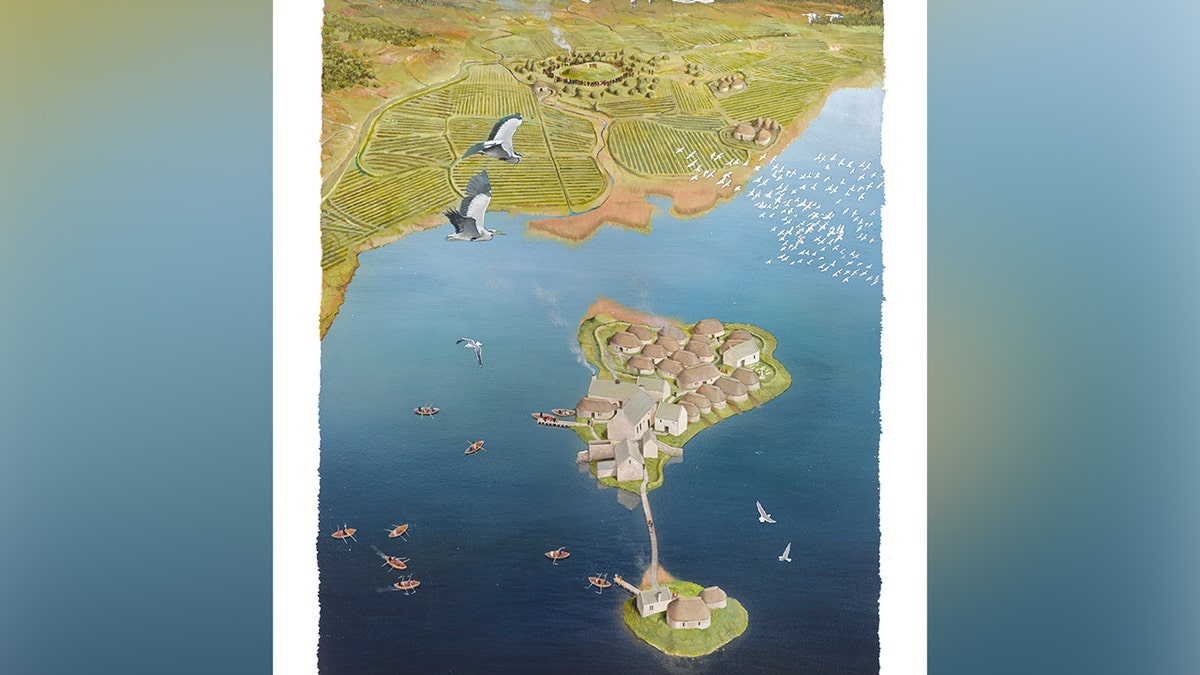
Archaeologists say the citadel’s dimension rivaled nice retains in England, together with Carlisle, Bamburgh and Lancaster castles. (David Simon by way of SWNS)
Scotland, which has been inhabited for millennia, has been the setting of a number of thrilling archaeological finds this yr.
This summer season, an archaeology scholar discovered an uncommon historical head with an eerie smile whereas digging at a Scottish farm.
CLICK HERE TO GET THE FOX NEWS APP
Earlier this yr, a prehistoric village was additionally found close to Inverness, Scotland, on the website of a future golf course.